



Prize scams are fooling Americans of every age and income level — not because victims are gullible, but because the scripts are engineered to work. Take two minutes to find out how vulnerable you really are.
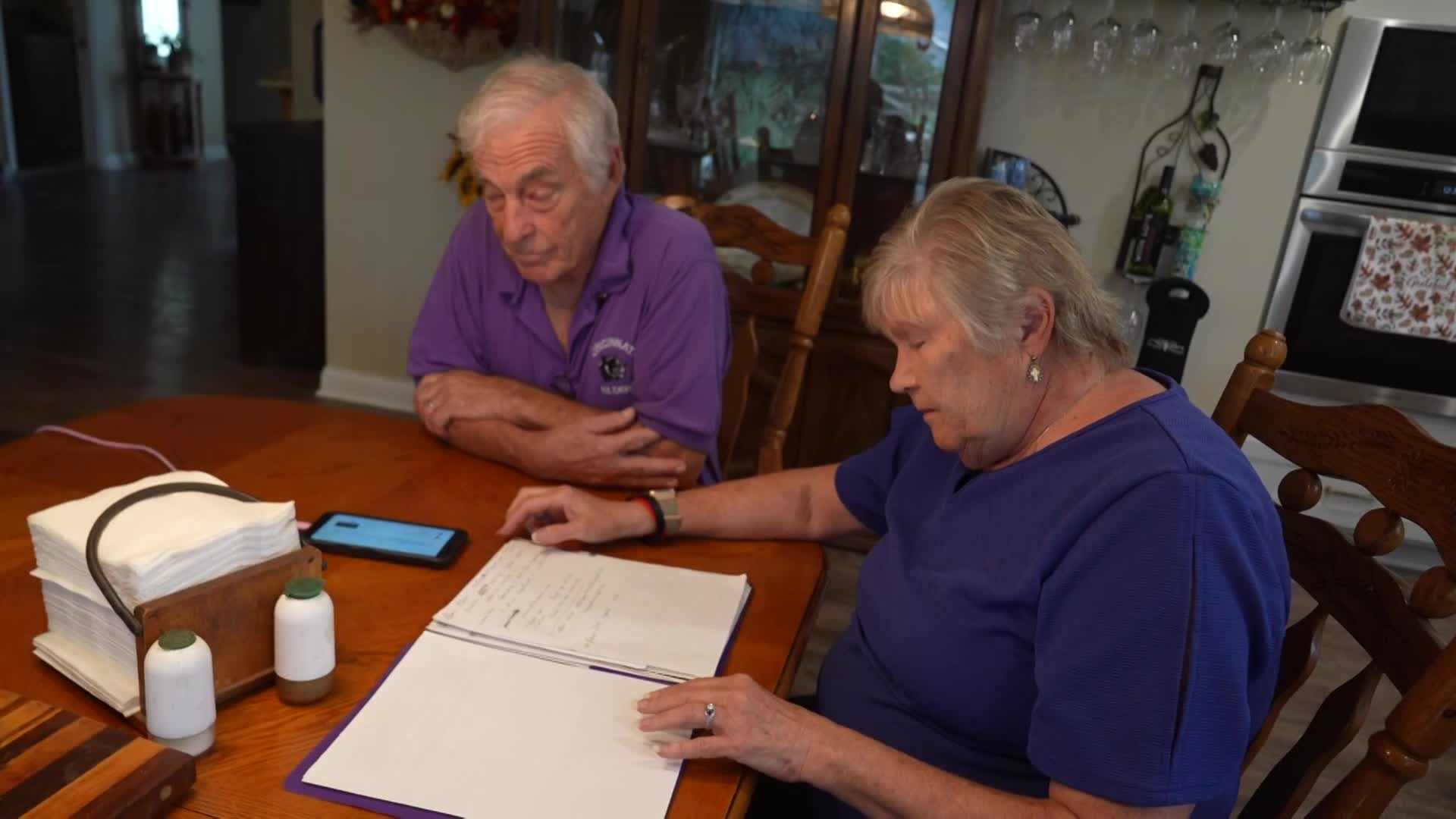
Tom and Cheryl Bredestege got a phone call that felt like a miracle. A man called 'Albert' told them they'd won an $850,000 sweepstakes — a reward, he said, for their years of paying bills on time and keeping good credit. All they had to do was pay a little over $2,500 in taxes first, using Amazon gift cards.
The Bredesteges saw through it before losing a dollar. Millions of other Americans don't. Here's how to make sure you're one of the lucky ones.
- $850,000 — Fake Prize Promised
- $36,000 — Escalated Demand
- $2,500 — Upfront 'Tax' Requested
Could You Spot a Prize Scam?
Six real scenarios. See how you hold up against tactics scammers use right now.
A caller tells you that you've won $850,000 in a sweepstakes — but you never entered any contest. What's your first move?
- Ask for more details and keep listening — Engaging keeps you in the scammer's script. The Better Business Bureau is explicit: legitimate sweepstakes don't pay out people who never entered in the first place. If you didn't enter, you didn't win.
- Hang up immediately — Correct call. The BBB's Josh Planos says the very first red flag is winning a contest you never entered. No legitimate organization awards prizes to non-participants.
- Ask them to call back later — A callback just gives the scammer another shot. The moment you didn't enter is the moment the 'prize' stopped being real.
- Write down the prize amount and ask for paperwork — Requesting documents sounds cautious, but scammers can send convincing fakes. The stronger move is ending the call — you can't win something you didn't enter.
The caller says you need to pay $2,500 in taxes before the prize money is released. They want you to buy Amazon gift cards and read them the codes. What does this tell you?
- Gift cards are just easier for them to process remotely — That's exactly what scammers want you to think. Gift card codes are untraceable and irreversible — that's why scammers demand them. The BBB confirms you are never charged to claim a legitimate prize.
- Paying taxes upfront on prize winnings is standard IRS procedure — It isn't. The IRS collects taxes on winnings through your annual return — not through a phone call asking for gift card codes. The BBB states clearly: taxes, shipping, and processing fees are not collected before a prize is delivered.
- This is a definitive scam signal — no legitimate prize works this way — Exactly right. The BBB's Josh Planos puts it plainly: 'You are not charged to claim a prize.' Demanding gift cards before a payout is one of the clearest signs a call is fraudulent.
- It depends on the size of the prize — $850,000 might require different paperwork — Prize size doesn't change the rule. The BBB confirms that legitimate sweepstakes — at any dollar amount — do not require winners to pay taxes or fees upfront before receiving a payout.
The caller says you must keep the prize a secret and act before the end of the day or the offer expires. Which FTC warning sign does this trigger?
- Sending a check and asking you to send money back — That's a different FTC red flag — also real, but not the one at play here. Urgency and secrecy are classic pressure tools designed to cut off your support network before you can think clearly.
- Claiming to represent a government agency — Government impersonation is a separate FTC red flag. But the tactic here — 'keep it secret, act now' — is the FTC's pressure warning: scammers create urgency so you don't have time to consult anyone who might talk you out of it.
- Pressuring you to act immediately — Right. The Federal Trade Commission specifically flags immediate pressure as a key warning sign. Cheryl Bredestege noted the scammer told them to keep it secret — that isolation tactic goes hand in hand with artificial urgency.
- Insisting on payment through wire transfer — Wire transfers are also flagged by the FTC — but the mechanism here is urgency and secrecy. Any legitimate prize notification gives you time to consult family, an attorney, or the BBB before responding.
A follow-up call comes in. The same 'prize coordinator' now tells you the prize value has increased — but so has the required upfront payment, jumping to $36,000. What does escalating demands indicate?
- The prize grew because of interest — this happens with large award pools — That's not how sweepstakes work. In the Bredestege case, the scammer called back mid-interview to raise his demand to $36,000. Escalation is a pressure tactic — scammers test how far victims will go before stopping.
- A processing error inflated the amount — it should be corrected in writing — There's no error to correct because there's no prize. Escalating demands are a classic scam pattern — each new figure is designed to see whether the victim will keep going.
- This is a major red flag — scammers escalate demands to maximize what they extract — Exactly. The Bredesteges experienced this firsthand: the scammer called back during a reporter's interview and raised his ask from $2,500 to $36,000. Escalation means the scammer believes they have a willing target.
- It could be legitimate if they send official documentation of the new amount — Documents can be forged cheaply. The jump from $2,500 to $36,000 in a single follow-up call is not a paperwork issue — it's a scam pattern the BBB and FTC both document.
The caller says he represents Amazon and that the prize is tied to your years of loyal purchasing. How does this fit the FTC's list of scam signals?
- Amazon does run loyalty programs — this is worth exploring — Using a well-known brand name is precisely how scammers build credibility. In the Bredestege case, the scammer tied the prize to good credit and bill-paying history — flattery designed to make the story feel personal and plausible.
- Claiming to represent a well-known organization is an FTC red flag — Correct. The FTC explicitly warns consumers to be skeptical when someone claiming to offer a prize says they represent a well-known company or government body. Name-dropping Amazon, the IRS, or Publishers Clearing House is a trust-building tactic, not a legitimacy signal.
- Ask for the caller's employee ID and verify it on Amazon's website — Verification instinct is good, but any ID a scammer gives you will be fake. The stronger protection: know that Amazon and other major companies don't call customers out of the blue to deliver surprise cash prizes.
- Request a written award letter on Amazon letterhead before proceeding — A paper request slows things down, which helps. But letterhead can be fabricated easily. The BBB's rule remains the cleaner test: if you didn't enter, you didn't win — regardless of what letterhead says.
Your elderly parent calls you, excited about an $850,000 prize notification. They haven't paid anything yet but are about to buy gift cards. What do you say first?
- Tell them to ask the caller for a callback number and hang up to research — Pausing is better than acting immediately — but the BBB's cleaner rule is that legitimate prizes never require upfront gift card payments. Go straight to that point so your parent has a bright-line test.
- Remind them: you are never charged to claim a real prize, and gift cards mean it's a scam — This is the message Cheryl Bredestege now shares publicly: 'Mom or dad — don't get that cashier's check to pay the taxes.' The BBB is unambiguous — taxes, shipping, and processing fees are not charged before a legitimate prize is paid out.
- Ask them to forward the caller's number so you can report it — Reporting is valuable, but stop the gift card purchase first. The Bredesteges' advice is direct: if someone says you've won a large prize but asks for money first, walk away — before a single card is bought.
- Tell them to ask the prize coordinator for proof of IRS authorization — The IRS doesn't authorize prize distributions over the phone, and scammers can fabricate any document you request. The single most protective phrase: 'A real prize never requires gift cards upfront.'
When Tom and Cheryl Bredestege answered that phone call, the script was already running. The caller — who gave his name as 'Albert' — wove together flattery, credibility, and urgency into a story that felt personal. Their good credit history. Their years of responsible bill-paying. A reward just for them.
That's not an accident. The Better Business Bureau's Josh Planos says there's something deeply psychological about the idea of the golden ticket — the surprise windfall that confirms you've been doing everything right. It cuts across income levels, education, and age. Anyone who has ever hoped for a break can be a target.
There's something psychological about the idea of the golden ticket that has really latched on regardless of age, regardless of sophisticationJosh Planos, Better Business Bureau
The Bredesteges didn't lose any money — but they came close enough to understand how it happens. The caller's story was engineered to feel personal: not a random prize, but a reward for behavior they were genuinely proud of. That specificity is what makes prize scams different from obvious spam. It doesn't feel random. It feels like it was meant for you.
Cheryl Bredestege put it plainly: a senior citizen who has spent decades paying bills on time and maintaining good credit is perfectly primed to hear that framing and feel, for just a moment, that they deserve this.
Prize Scam Claims — True or False
Legitimate sweepstakes sometimes require winners to pay upfront taxes or fees.
Verdict: false
The BBB's Josh Planos is categorical: 'You are not charged to claim a prize.' Taxes, shipping, and processing fees are never collected before a legitimate payout is delivered.
You can win a sweepstakes you never entered if a company selects you based on your purchasing or credit history.
Verdict: false
The BBB states directly that legitimate sweepstakes don't provide payouts for people who didn't enter in the first place. A prize tied to 'good credit' or 'loyal purchasing' is a scammer's fabrication.
Gift cards are a legitimate payment method for prize-related fees.
Verdict: false
The FTC specifically warns consumers against any caller who insists on payment through gift cards. Gift card codes are untraceable and irreversible — that's exactly why scammers demand them.
Scammers typically target only elderly or financially vulnerable people.
Verdict: false
The BBB's Josh Planos emphasizes that prize scams work 'regardless of age, regardless of sophistication.' The psychological pull of the golden ticket is nearly universal.
Real Prize vs. Prize Scam — Know the Difference
| Legitimate Sweepstakes | Prize Scam | |
|---|---|---|
| Did you enter? | Always — you must have entered to win | No — scammers select you 'randomly' |
| Upfront payment required? | Never — no fees to claim a prize | Yes — taxes, fees, or shipping demanded first |
| Preferred payment method | Check or direct deposit to winner | Gift cards, wire transfer, or payment apps |
| Secrecy required? | No — winners are publicly announced | Yes — 'keep it secret' is a pressure tactic |
| Time pressure | Reasonable response window given | Act immediately or lose the prize |
| Escalating demands | Prize amount is fixed and documented | Demands increase — $2,500 became $36,000 |
Mom or dad -- don't get that cashier's check (to pay the taxes)Cheryl Bredestege, Sweepstakes scam victim
What to Do If You Get a Prize Call
- Ask yourself: Did I enter this? — If the answer is no, the call is a scam. The BBB confirms that legitimate sweepstakes do not pay out people who never entered.
- Never pay anything upfront — Real prizes do not require you to pay taxes, shipping, or processing fees before receiving your winnings. Any upfront payment request is a definitive red flag.
- Refuse gift cards as payment — Gift card codes are untraceable and can't be recovered once sent. The FTC flags gift card payment demands as a top scam indicator.
- Don't let urgency rush you — Scammers pressure you to act before you can think or consult anyone. A real prize notification gives you time to verify and respond.
- Tell someone — don't keep it secret — The Bredesteges were told to keep their 'prize' confidential. That secrecy demand is designed to cut you off from family or friends who might recognize the scam.
- Hang up and report — End the call. Report the attempt to the FTC at consumer.ftc.gov and the BBB's Scam Tracker. Your report helps protect others from the same script.
What saved the Bredesteges was something simple: they talked to each other, slowed down, and let skepticism win over excitement. That window — the moment between hearing exciting news and acting on it — is exactly what scammers try to close with urgency and secrecy demands.
The BBB's Planos frames it as a structural test rather than an emotional one. You can feel excited about a prize call and still apply the rules: Did I enter? Am I being asked to pay first? Am I being told to keep quiet? If any answer is yes, the call is fraudulent — regardless of how convincing the voice on the other end sounds.
Report a Prize Scam
- Federal Trade Commission: The FTC maintains official guidance on fake prize, sweepstakes, and lottery scams — and accepts consumer reports.
- Better Business Bureau Scam Studies: The BBB tracks sweepstakes and lottery scam patterns and publishes updated research to help consumers recognize current scripts.
Why These Calls Keep Working — The Psychology Behind Prize Scams
Prize scams persist because they are not random flattery — they are engineered persuasion. The Bredestege scammer didn't just say 'you won.' He built a story: years of responsible behavior, a deserved reward, a specific and flattering reason why they were chosen. That narrative primes recipients to feel validated before they feel suspicious.
The BBB's Josh Planos describes the appeal of the 'golden ticket' as genuinely universal — it transcends age, income, and education. That's why Cheryl Bredestege says a senior citizen who has spent a lifetime doing the right thing financially is a particularly resonant target for this framing. The scam doesn't attack their judgment. It confirms it — right up until the moment they're asked for gift card codes.
The FTC's list of red flags maps directly to psychological pressure points: urgency cuts off deliberation, secrecy cuts off outside counsel, and familiar brand names like Amazon build false institutional credibility. Understanding these mechanisms doesn't guarantee protection — but it makes the script recognizable the next time it runs.
