

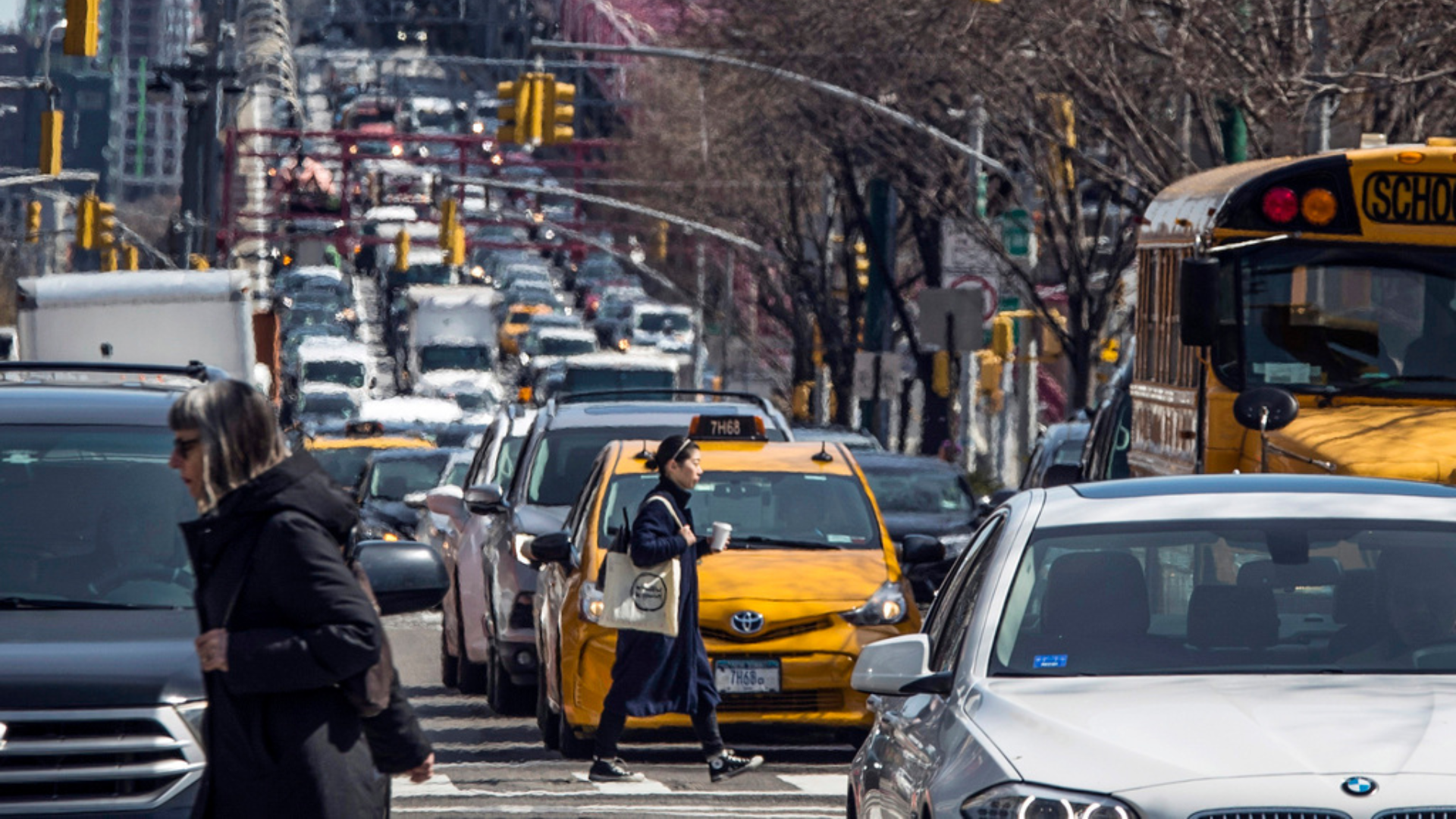


The Trump administration on Wednesday proposed a significant rollback of carmakers’ fuel economy standards, dealing a blow to efforts to curb vehicle emissions and throwing the weight of the federal government squarely behind gas-powered cars as other nations throughout the world continue to invest heavily in electric vehicles.
The new proposal concerns the National Highway Traffic Safety Administration’s Corporate Average Fuel Economy (CAFE) Standards — regulations that require automakers to meet a specific average fuel economy for their entire fleet of cars and light trucks by certain model years.
Speaking from the Oval Office on Wednesday alongside Republican lawmakers and leaders of some of the nation’s top auto manufacturers, Trump described the standards as “ridiculously burdensome” and alleged they “put tremendous upward pressure on car prices.”
“It's a quest to end the gasoline powered car,” Trump claimed. “This is what they wanted to do.”
Under the current rules, finalized by the Biden administration in 2024, all passenger car models sold in the U.S. must meet CAFE standards equal to about 50 miles-per-gallon by 2031, up from the current 39 mile-per-gallon requirement. Heavy duty trucks and vans also face higher efficiency requirements over the coming decade.
Biden administration officials estimated the stricter requirements would reduce gas consumption by about 64 billion gallons through 2050 and cut carbon dioxide emissions by 659 million metric tons.
Contemporaneous government figures also projected that the policy would reduce Americans’ fuel costs by about $600 per vehicle on average, with a total net benefit of $35.2 billion.
The new rules propose significantly lower efficiency standards than the Biden-era requirements: new passenger vehicles would have to meet average fuel economy standards of just 34.5 miles-per-gallon by model year 2031, the NHTSA said. Trump administration officials estimated the proposal would save American families an average of $1,000 off the average cost of a new vehicle, with a total savings of $109 billion over the next five years.
RELATED STORY | The UN's COP30 climate summit begins, without the US
Environmental groups, meanwhile, decried the new proposal — suggesting it would imperil not only the planet but also Americans’ pocketbooks.
“Any effort to roll back standards is really denying consumers the benefits that technology offers,” Ann Mesnikoff, federal legislative director of the Environmental Law & Policy Center, told Scripps News in an interview. “The automakers have that technology, [and] taking it away from new vehicles won't save consumers money, it will likely end up costing them at the gas pump.”
“The fuel economy standards have made vehicles more efficient, saving Americans money and reducing our reliance on imported oil,” echoed Andy Su, a transportation attorney with Environmental Defense Fund, in a statement to Scripps News. “Today’s proposal to reverse course on the fuel economy standards is a U-turn that would increase costs for Americans and be disastrous for our economy, national security, and environment.”
Both groups promised to oppose the proposal, which must go through a 45-day public comment period before being finalized, though neither would say whether that included a possible legal challenge.
Auto manufacturers — who’ve previously faced fines for violating efficiency standards — celebrated the change.
In statements to Scripps News, Ford CEO Jim Farley said the new rules were a “a win for customers and common sense”; Stellantis CEO Antonio Filosa described them as aligning regulations with “real world market conditions”; and a GM spokesperson said the company intended to increase production on gas-powered full-size SUVs as a result.
During Wednesday's event, Trump administration officials decried the Biden-era regulations as unrealistic and intended to phase out gas-powered cars altogether.
“There's no car made in the U.S. that you would be able to sell two years from now, three years from now, under that rule,” claimed Kevin Hassett, director of the White House National Economic Council. “What [Biden] wanted to do was make everybody have an electric car."
Yet experts noted that while Biden's proposed 50 mile-per-gallon requirement may sound high, it’s just an average — so individual car models may be more or less efficient.
And the tests the government uses to determine efficiency vary significantly from the one most automakers use to market their vehicles; a 50 mile-per-gallon regulatory efficiency requirement translates to about a 36 mile-per-gallon sticker listing, for example.
“What consumers see in the window is quite different than what the actual standard is,” Mesnikoff said.
While the announcement on Wednesday was significant in officially rolling back the fuel efficiency requirements, Republicans had begun to weaken them well before December. In January, Secretary of Transportation Sean Duffy ordered his agency to begin revising the fuel economy standards due to a Trump executive order, and the “Big Beautiful Bill Act” championed by Trump and congressional leaders eliminated civil penalties for automakers who violate fuel efficiency standards.
RELATED STORY | Scientists, advocates blast EPA plan to undo climate finding
Moving forward, Trump administration officials are exploring overturning the Environmental Protection Agency’s so-called “Endangerment Finding,” which underpins the agency’s overall ability to regulate any greenhouse gasses.
