



CORPUS CHRISTI, Texas —
Gov. Greg Abbott claimed Tuesday that the state gave Corpus Christi $750 million to address its water crisis — and that city leaders squandered it. The claim does not accurately reflect how the money works, how much has been released, or what restrictions govern its use.
Abbott made the remarks during a campaign stop in Manor, near Austin, when asked whether he was monitoring Corpus Christi's water situation.
"We provided them with $750 million — three quarters of a billion dollars — in funding for them to address their water problem," Abbott said. "You know what they did? They squandered it and then they changed their plan and then they were indecisive about what to do."
Abbott also warned that the state may intervene directly. "We can only give them a little time more before the state of Texas has to take over and micromanage that city," he said, "to make sure that every resident who goes to the water tap and turns it on, they're going to be getting water out of their faucet."
The money: what it is and what it isn't
The state did not give Corpus Christi $750 million. The figure refers to loan commitments made through the State Water Implementation Fund for Texas, known as SWIFT — a loan program operated by the Texas Water Development Board (TWDB). The money was never a grant, and most of it has not been released.
In July 2024, the TWDB approved $535 million in multi-year SWIFT loans designated specifically for the proposed Inner Harbor Seawater Desalination Plant. Of the full $750 million commitment, only approximately $235 million was issued to the city in the form of bonds. That amount the city owes regardless of what happens to the desalination project. The remaining funds are locked — accessible only if the city proceeds with a TWDB-eligible desalination project.
When the desalination project collapsed, the city asked TWDB whether the remaining funds could be redirected to other water infrastructure. The answer was no.
In a memo, TWDB stated: "Only projects recommended in the 2026 Coastal Bend Regional Water Plan and the 2027 State Water Plan are eligible for funding." The board added that a change in scope would be "unprecedented" and would contradict the city's original loan application — the documents the TWDB used to approve and prioritize the city's financing. The memo did note that a separate proposed La Quinta desalination project would also qualify for SWIFT funding.
In short: of the $750 million Abbott says was squandered, the city received roughly $235 million. The rest cannot be spent on anything other than an approved desalination project.

How the city got here
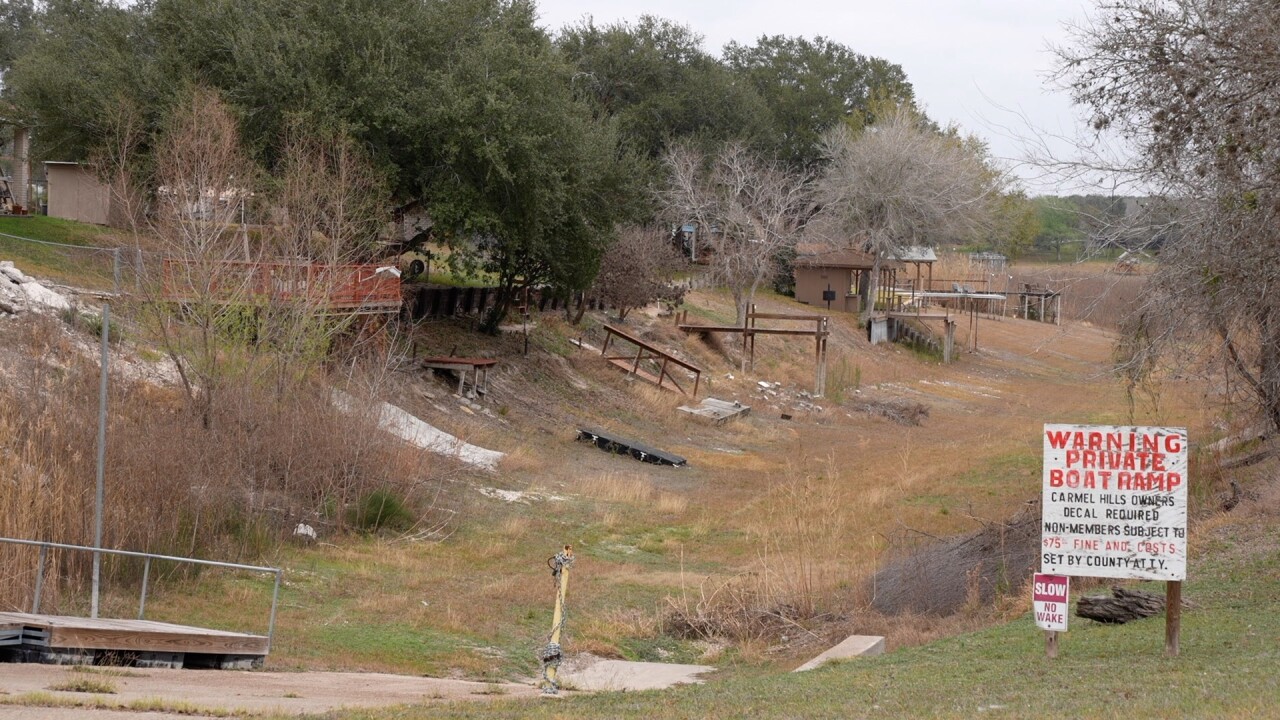
Corpus Christi's water troubles have been building for years, driven by persistent drought, rapidly growing industrial demand and a series of delayed or canceled water supply decisions.
The Inner Harbor Seawater Desalination Plant was the centerpiece of the city's long-term water strategy. But its price tag ballooned to approximately $1.2 billion by July 2025, fueling public opposition over cost and concerns about environmental impact on Corpus Christi Bay.
City council paused a key vote on the project in July 2025, then voted it down 6-3 in a contentious September meeting that stretched past 1 a.m. after nearly 100 residents waited hours to speak. Before that vote, a council member said Abbott's chief of staff called her and warned the state would cut all funding to Corpus Christi if the council did not proceed.
In November, the council revisited the project and began moving forward with a different company. Mayor Paulette Guajardo announced Wednesday she would call a special emergency council meeting to vote on the new contract. No date had been confirmed as of Wednesday evening.
Lake Corpus Christi and Choke Canyon have fallen to a combined 8.7% capacity. Corpus Christi remains under Stage 3 drought restrictions. Lake Texana, currently the city's primary water source, could face regional curtailment as early as mid-April.
City responds
The City of Corpus Christi released a formal statement Wednesday acknowledging Abbott's frustration while defending its record.
"We understand the Governor's frustration and sense of urgency to bring seawater desalination online, and we continue to work on desalination options," the statement read.
The city described a $1 billion portfolio of active water projects it called "the most aggressive water infrastructure program in the City's history," saying several projects are already producing water with more capacity expected online within 24 months.
City Manager Peter Zanoni separately told KRIS 6 News that the city is "deeply grateful for prior and continued support from Governor Abbott" and pointed to the $1 billion in recently council-approved water supply projects as evidence of action.
For the latest local news updates, click here, or download the KRIS 6 News App.
Catch all the KRIS 6 News stories and more on our YouTube page. Subscribe today!
