



Despite the fact that Germany surrendered on May 8, 1945, NAS-Corpus Christi housed over 150 German Prisoners of War from August 1945 to March 1946. The POWs were assigned to work details on the base and were paid 80 cents per day for their labor. The prisoners were later transferred to England and eventually repatriated back to Germany.

World War II came to an end with the surrender of Japan on September 2, 1945. By 1945, there were 997 hangars and other buildings at NAS Corpus Christi. The total government investment had grown to more than $100 million. Despite the end of WWII, the need for a strong United States military did not disappear. A new war had already begun….the Cold War. The training of naval aviators continued to be the main mission of NAS Corpus Christi. New, more advanced aircraft would require the training period to be extended to 18 months. In 1948, the Naval Air Advanced Training Command was transferred to Corpus Christi from Jacksonville, Florida and NAS-CC became a permanent installation. That would not be true with the surrounding auxiliary fields. Waldron Field was closed on April 1, 1946, and Chase Field in Beeville was shut down on July 1. The Naval Air Technical Training Center on Ward Island remained open until November 1947, when the Technical Training Center was moved to Tennessee. The City was allowed to lease Ward Island with its multiple buildings as the site of the University of Corpus Christi. The city then leased the island to the Baptist General Convention, which administered the University.
__________________________________________________
READ ALL THREE PARTS:
THE NAVY COMES TO CORPUS CHRISTI - PART 1
THE NAVY COMES TO CORPUS CHRISTI - PART 2
THE NAVY COMES TO CORPUS CHRISTI - PART 3
__________________________________________________
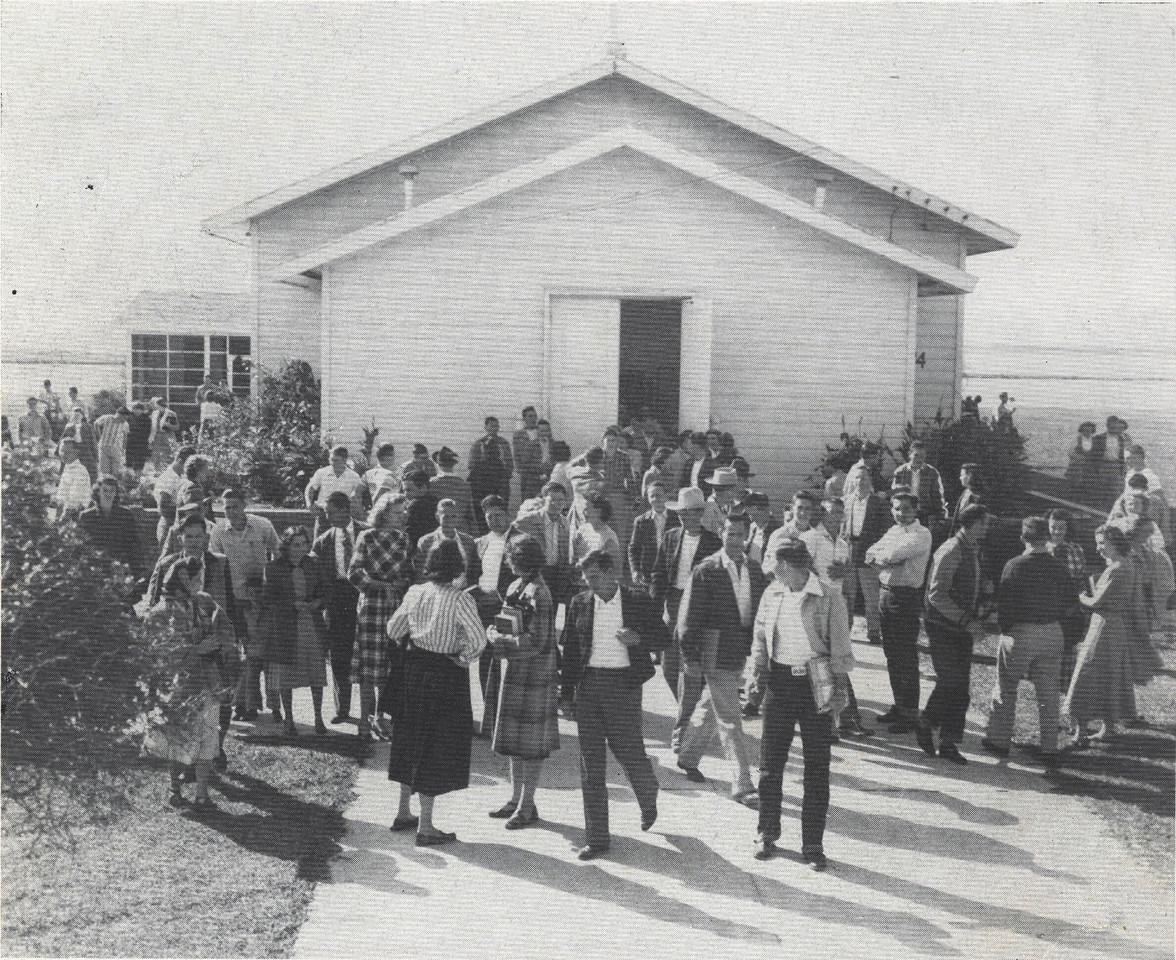
The Navy also decided to close Cuddihy Field in the Spring of 1947. The field and all 81 of its buildings were leased to the City of Corpus Christi for $1.00 per year. The City planned to use the facility as an auxiliary field for Cliff Maus Airport, moving all private aircraft to the new Cuddihy facility. The new University of Corpus Christi also conducted its first year of classes at Cuddihy before moving to Ward Island. In May 1947, NAS Corpus Christi became the headquarters of the Navy’s famed “Blue Angels” flight demonstration team. The team would remain in Corpus Christi until September 1949, when the team moved to Florida. After service during the Korean War, the Blue Angels once again established headquarters in Corpus Christi in October 1951. This time, they remained at NAS Corpus Christi until May 1954 before moving to Pensacola.

In July 1969, Waldron Field was reactivated as “Outlying Landing Field Waldron”. Two of its remaining runways were used for touch-and-go landings for aircraft assigned to NAS Corpus Christi. Cabiness Field was closed in 1958. Many of its buildings were auctioned off by the Navy. Like Waldron, Cabiness became an Outlying Landing Field, used in the training of student pilots. In 1962, CCISD obtained 66 acres and 17 buildings at Cabaniss, free of charge. The district intended to create a large vocational complex for CCISD students, but that never happened. Instead, in 1964, the district built a first-class baseball stadium for CCISD teams. They would also add a football stadium next door for all CCISD junior high games.

Rodd Field, the first of the Navy’s auxiliary fields to be opened in 1941, would remain open following WWII. The field was named in honor of Lt. Commander Herbert Rodd. He was a member of the crew of the seaplane NC-4, the first Navy airplane to cross the Atlantic successfully. He was later killed in a crash in Virginia in 1932. Rodd Field’s 854 acres continued to be fully utilized in the training of NAS pilots. That role lasted until August 1, 1947, when the Navy announced the closing of Rodd Field. However, over the next 10 years, the Navy would continue to use a number of buildings for housing Navy officers and their families. By 1958, only one of three Rodd Field original hangars remained standing in addition to 77 buildings. In December 1959, a new mission for Rodd Field was announced. A 137-acre portion of the old auxiliary base was to be used by NASA as an orbital tracking station for Project Mercury, Gemini, and Apollo space flights. The remaining 700 acres of the base were to be sold at auction. The $5 million tracking facility was constructed and ready by December 1960. The tracking station would be able to gather over 100 pieces of information from an overhead space capsule and its astronauts. The Rodd Field tracking station would be one of 17 such stations worldwide and would operate until 1974.

Most of the nearly 4,000 civilians working at NAS-Corpus Christi in the Post-War 1950s were employed in the Navy’s “Overhaul and Repair Department” (O&R). The huge facility assembled new aircraft and overhauled aircraft needing repairs. In 1959, O&R was closed. The loss of O&R’s $18 million payroll dealt a severe blow to the City’s economy. But in 1961, the Army moved into the old O&R facility and opened “ARADMAC” (the “Army Aeronautical Depot Maintenance Center”). The facility would focus on the repair and overhaul of rotary-winged aircraft. ARADMAC would become the “Corpus Christi Army Depot” on July 1, 1974. and it would remain as the city’s largest employer with over 4,200 employees.

It’s been more than 80 years since NAS Corpus Christi opened. The Navy’s presence in the City continues to have widespread popular support and continues to have a major impact on the City’s economy.
Robert Parks is a special contributor to KRIS 6 News. Parks was a history teacher at Carroll High School for 19 years and is now retired. His knowledge of Corpus Christi history makes him a unique expert in the subject.